The Vocabulary Assessment grid
“Teaching new words is important: we know that a robust vocabulary underpins and improves our ability to communicate via listening, speaking, reading and writing. Yet, the explicit teaching of ambitious vocabulary does not guarantee retention and deep learning of new words for our pupils. In fact, exposition of new vocabulary could be thought of as the beginning of the journey of a word. We must then turn our attention to how we embed recently-taught vocabulary in order for pupils to consolidate secure understandings.”
Matthew Western
EFF
Vocabulary is the bedrock of understanding. Assessment at its best should focus on the things that matter for student learning , the things you want to spend time on and return to as a teacher. The strategy “Keyword Assessment Grid” does both of these things. It allows students to practise applying and distinguishing key topic vocabulary. and is a simple, visual formative assessment tool that efficiently identifies student next steps for the teacher. Most importantly it allows you, the teacher to give feedback in while learning is still happening in a structured and strategic way.
By building a grid where key terms overlap across related concepts or remain unique to specific ideas, teachers can test whether students truly understand the nuances between competing concepts and quickly identify gaps in understanding and misconceptions.
How to Set It Up
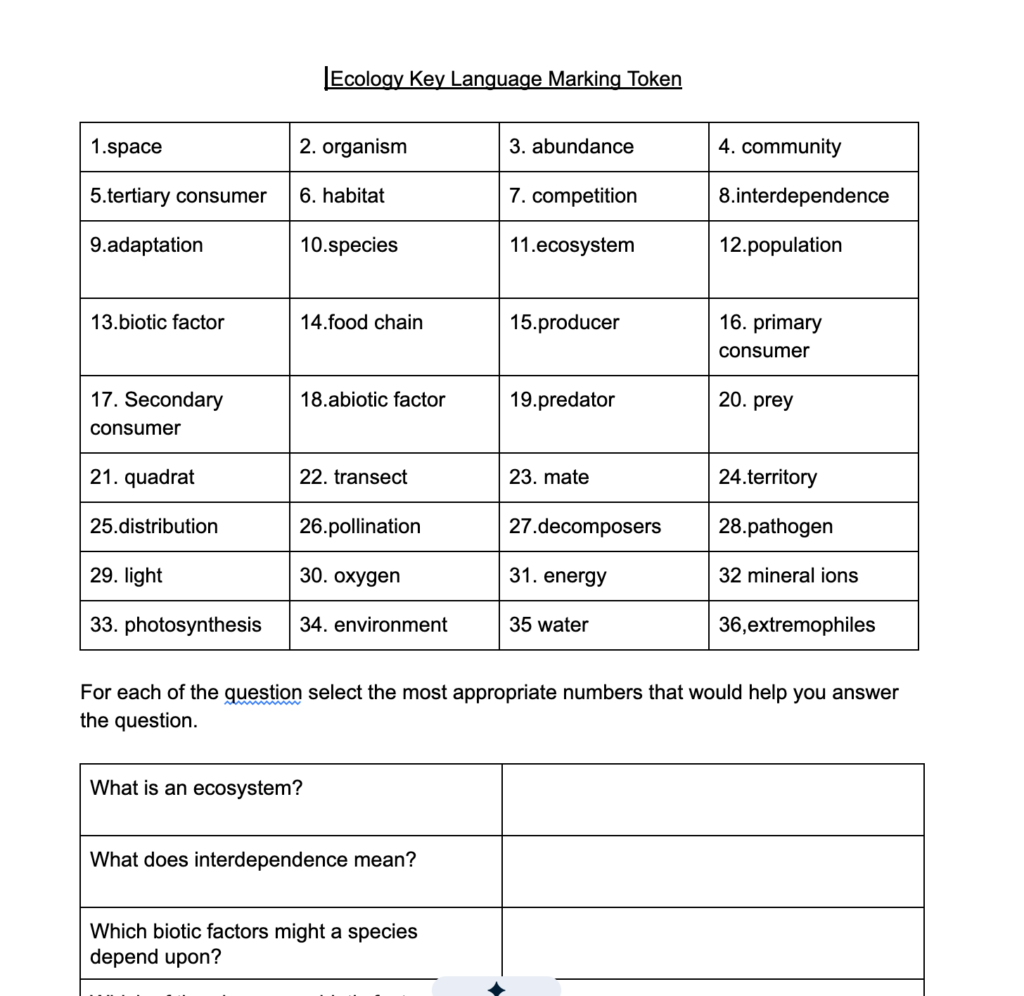
- Create the Vocabulary Grid: Build a list of keywords. Design it so some words apply to multiple related concepts, while others are unique to specific ideas.
- Write Questions for the students answer: Students answer questions by simply selecting the numbers of the correct keywords from the table.
- Create a mark scheme:: Write out a r list of the words you expect for each answer. This makes the assessmnet incredibly fast, and you can target key concepts that you want to know about. I promise this will develop your PCK too.
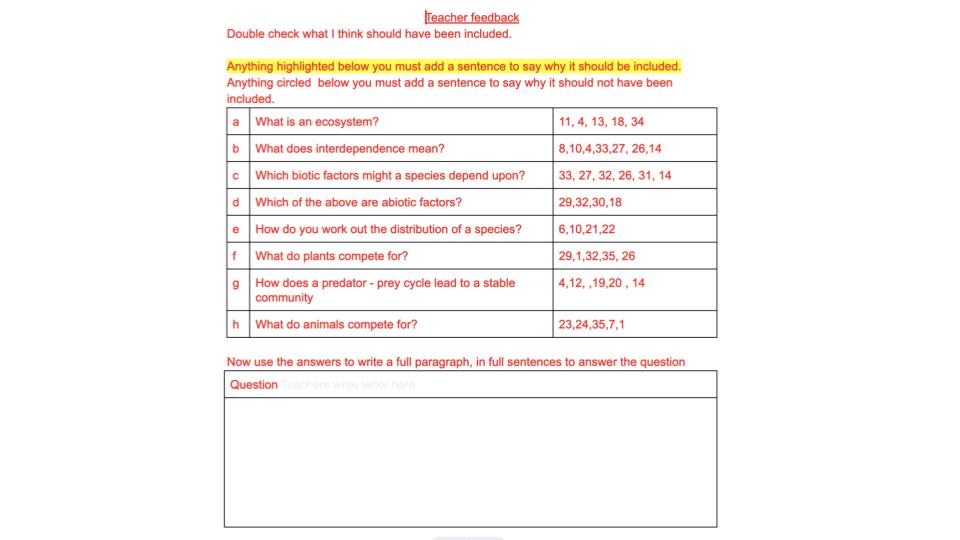
This should be a teacher marked task, and resisting self assessment is important. Dylan William behoves us to “Assure the quality of the learning, while it is happening, rather than after it has happened” to this end, the checking of the vocabulary selected by the students should be considered a midpoint in the process, not the end point. It takes very little time for you to mark, and it provides insights into emerging misconceptions and gaps that you may need to reteach. I have never used this strategy without having to reteach a concept or two, and the timing of our assessment means this is targeted and purposeful.
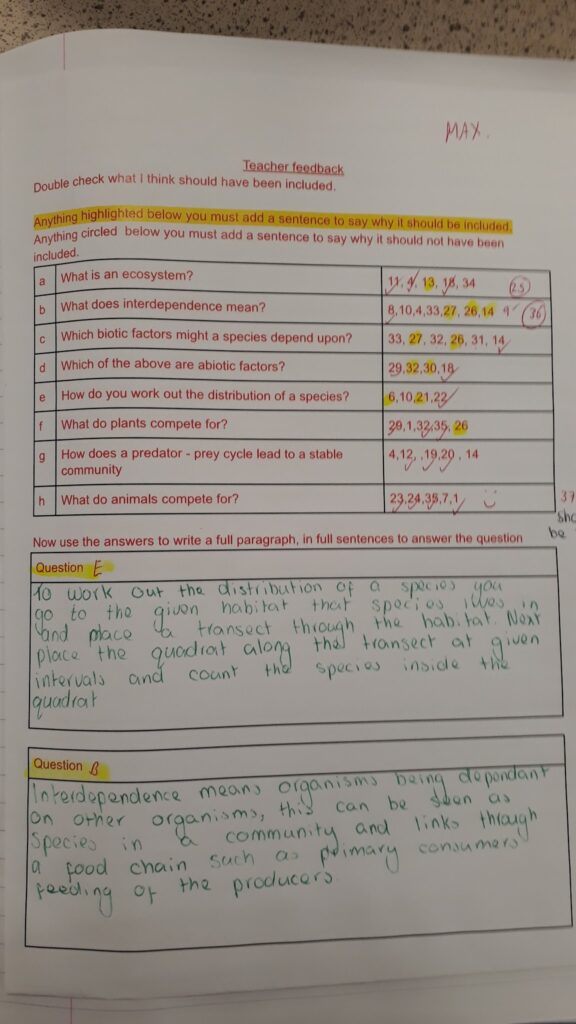
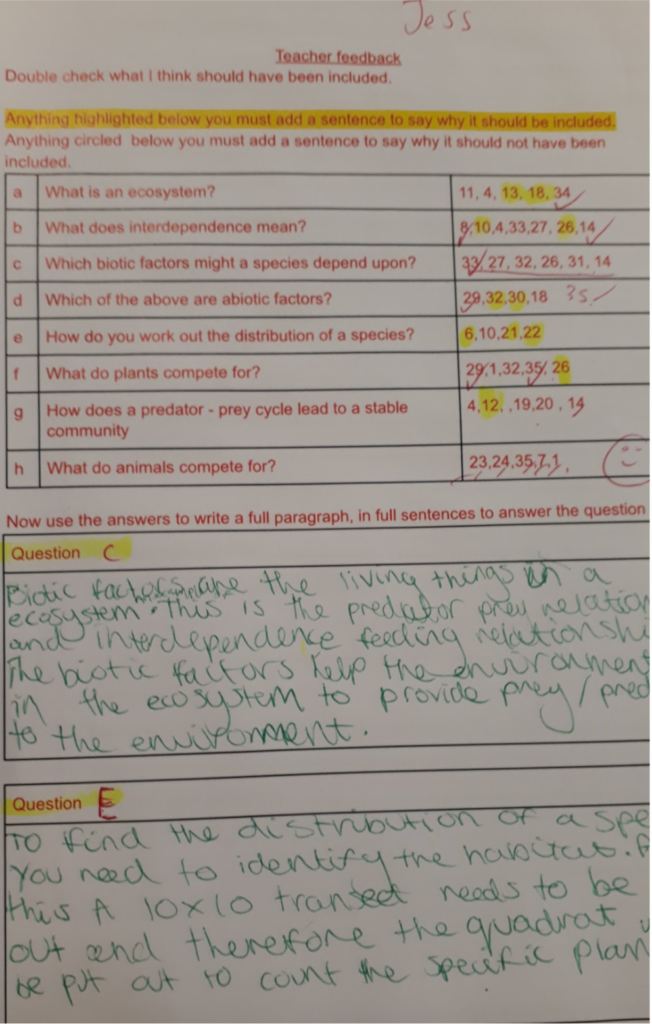
The first round of feedback asks students to reflect upon their upon omissions and misconceptions or errors. Feedback is provided to the students with an annotated mark scheme. I suggest highlighting missing keywords and circling any words that should not have been used in that context.
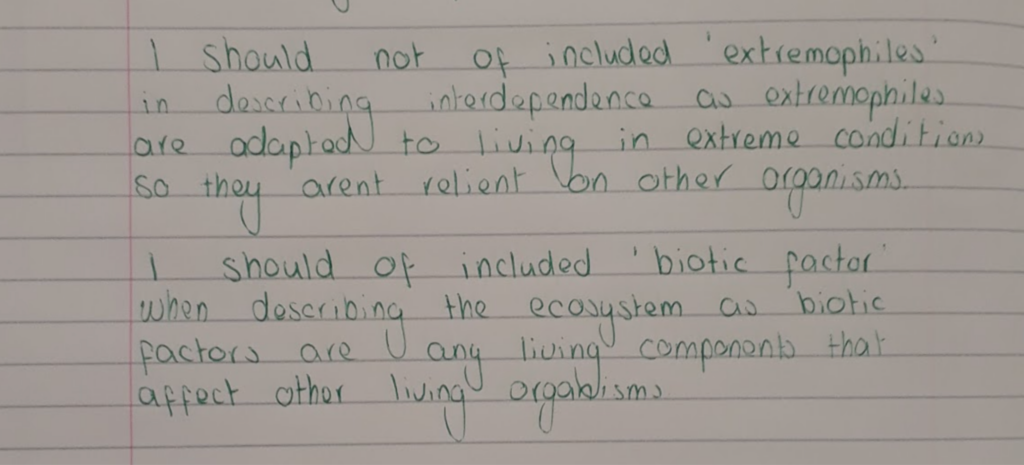
Students, in their books , then explain why they should have used a specific word. (Example: “I should have used ‘xylem’ for transpiration because that is where water travels.”) This directly directs students to develop new vocabulary. i.e. the gaps in their knowledge.
Students can then explain why they should not have used a wrong word. (Example: “I should not have used ‘phloem’ because phloem carries sugars, not water.”) This directly develops understanding of vocabulary i.e it addresses misconceptions
The final phase of the process seeks to deepen student content knowledge and understanding.
Teachers should then choose at least two of the original questions for students to write out in full sentences, connecting the vocabulary into a complete response. This approach provides students with content focused feedback while giving them a clear scaffold for how to structure their work. What you choose should be based upon your knowledge of the student and the importance of the content for their future assessments or understanding. It should provide practice on what is important for the content but ultimately it should be what the next best step is for the student.
Summary
With careful vocabulary selection, the Keyword Assessment Grid proves that diagnostic assessment doesn’t need to be time consuming to be effective. It saves teachers precious marking time while providing students with structured, content-focused feedback that reshapes their understanding. Therefore students takes longer to complete their work than the teacher, and thereby fulfilling Dylan Williams’ Core Principles in “Embedded Formative Assessment”
“feedback should cause thinking. It should be focused; it should relate to the learning goals that have been shared with the students; and it should be more work for the recipient than the donor. Indeed, the whole purpose of feedback should be to increase the extent to which students are owners of their own learning,”
This strategy works as it provides feedback “in the act” of learning at a structured point within the process. Here the feedback happens before they do the longer written tasks not after it. It improves their understanding so that they can tackle it. With all good assessment strategies it is much more a conversation than a test.