This website uses cookies to ensure you get the best experience on our website.

Learn more
Got it!
XP Unpacked Logo
  • Unpacking XPUnpacked
  • Unpacking T&L
  • Unpacking Crew
  • Unpacking Expeditions
  • Unpacking Beautiful Work
  • Unpacking Leadership
  • Unpacking Inclusion
  • Unpacking Curriculum
  • Unpacking Technology
  • Unpacking Publications and Research
XP Unpacked Logo
  • Unpacking XPUnpacked
  • Unpacking T&L
  • Unpacking Crew
  • Unpacking Expeditions
  • Unpacking Beautiful Work
  • Unpacking Leadership
  • Unpacking Inclusion
  • Unpacking Curriculum
  • Unpacking Technology
  • Unpacking Publications and Research
XP Unpacked Logo
  • Unpacking XPUnpacked
  • Unpacking T&L
  • Unpacking Crew
  • Unpacking Expeditions
  • Unpacking Beautiful Work
  • Unpacking Leadership
  • Unpacking Inclusion
  • Unpacking Curriculum
  • Unpacking Technology
  • Unpacking Publications and Research

Archive

From Guesswork to Greatness

Why Mini Whiteboards Are Your Best Diagnostic Tool for the classroom

We’ve all been there. You’ve just finished explaining a complex concept and you ask the class: “Does everyone understand?”

A sea of nodding heads meets your gaze. You move on, only to find during the next assessment that half the class were actually lost at sea.

If we want to close the attainment gap and ensure no student is left behind, we need to move away from a “finger-crossing” pedagogy. This is where the humble mini whiteboard (MWB) becomes the most powerful piece of tech in your classroom.

Maths in Years 7 & 8

The value of this tool was brought into sharp focus during this week’s lesson drop-ins across Key Stage 3 Mathematics. Observing Year 7 and 8 lessons, it was striking to see how MWBs transformed the room from a passive environment into an active classroom. In one Year 8 session the teacher’s use of mini whiteboards was used to spot misconceptions and check students’ understanding of probability, the teacher paused, scanned the whiteboard responses and could make an informed decision on whether to move the lesson on or practise the current step. While in Year 7 students grappled with fractions and integers. Whiteboards were used by students to allow the teacher to ‘see’ students thinking across equivalents, simplifying and adding fractions.

These snapshots from classrooms this week highlight how they are essential for navigating formative assessment and providing in the moment feedback from students. 

The Power of 100% Participation

Traditional questioning (the “hands up” approach) usually samples the most confident 10% of the class. Mini whiteboards flip the script. When you say, “3, 2, 1… Show me!”, you get an instantaneous snapshot of every single student’s current understanding.

Why this matters for your PD:

  • Total Participation Technique: This boosts the participation ratio.  Every student must commit an answer to the board.
  • Safety to Fail: The temporary nature of a whiteboard marker means students are more willing to take risks when they know a mistake can be swiped away in seconds.

Diagnostic feedback isn’t just about seeing who got it right; it’s about identifying why they got it wrong. Mini whiteboards allow you to spot misconceptions and adapt your teaching accordingly. 

How to Maximise the Diagnostic Value:

StrategyActionBenefit
Hinge QuestionsAsk a multiple-choice question with specific distractors.Quickly identify exactly which misconception a group holds.
Process CheckingAsk students to show the first step of a multi-stage problem.Catch errors in logic 
Selective SamplingScan the room and narrate what you see: “I see three different methods for question four…”Promotes peer-to-peer learning and normalises diverse thinking.

Improving Your Practice: Top Tips

To make MWBs work effectively, consistency in routines is key. Without them, they can quickly turn into a distraction.

  1. The “Chin-It” Routine: Teach students to hold the board under their chin. This prevents them from hiding behind their boards or peering at their neighbour’s work.
  2. The “Hover & Pounce”: While students are writing, circulate. If you see a common error emerging, you can stop the class immediately to re-teach.
  3. No-Erase Policy: Occasionally, tell students not to erase their first attempt. This allows you to discuss the journey from a misconception to the correct answer.

The Bottom Line

Mini whiteboards are more than just a novelty; they are a high-leverage tool for responsive teaching. They allow us to stop teaching the lesson we planned and start teaching the students in front of us.

By making the invisible (thought processes) visible, we can provide the precise feedback our students need to succeed.

“Feedback is most powerful when it is given in the moment of learning, not as a post-mortem of a finished task.”

Based on the successes seen in Maths this week, which specific topic in your upcoming expedition would benefit most from a “show me” moment to catch common misconceptions?
Front Page News, Unpacking T&L

Inclusion Must Be Observable

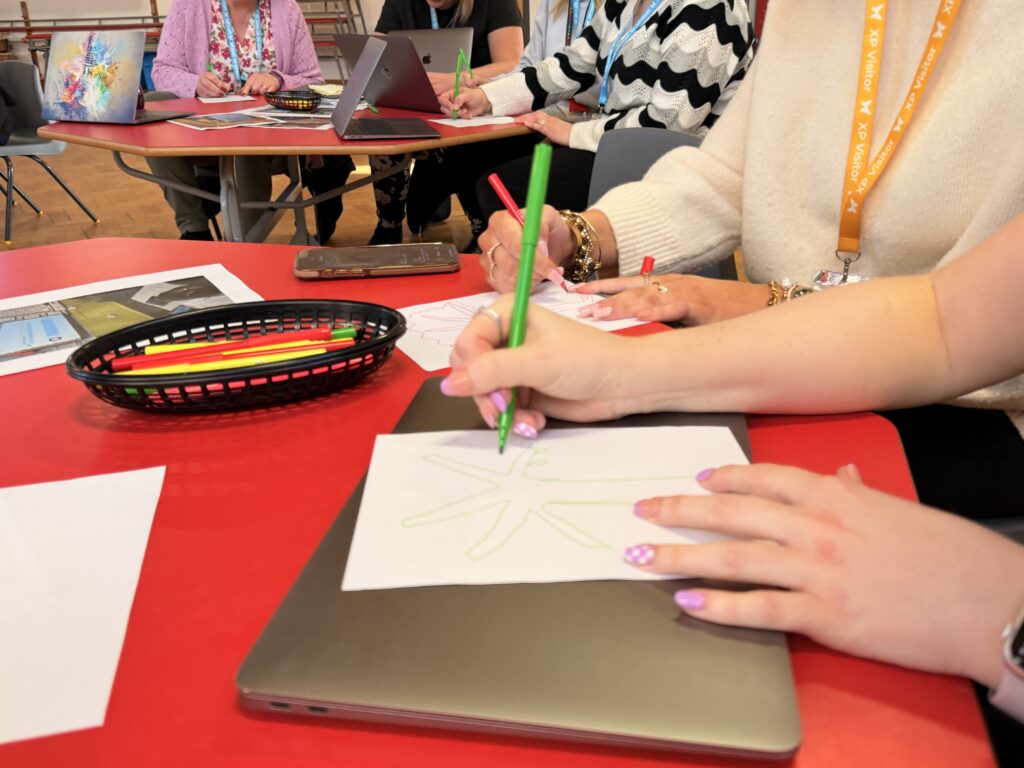
“Draw a tree.”

That was the instruction.

Thirty seconds later, the room was full of trees — tall ones, careful ones, hurried ones, hesitant ones.

Then we added the success criteria.

The tree needed:

  • Visible roots
  • Exactly five branches
  • At least three leaves per branch
  • A labelled trunk

The laughter came first. Then the checking. Then the mild frustration.

“You didn’t say that.”

Exactly.

Nobody in the room lacked the ability to draw a tree. But many hadn’t met the criteria — not because they couldn’t, but because they didn’t know what success looked like.

Ability wasn’t the barrier. Access was.

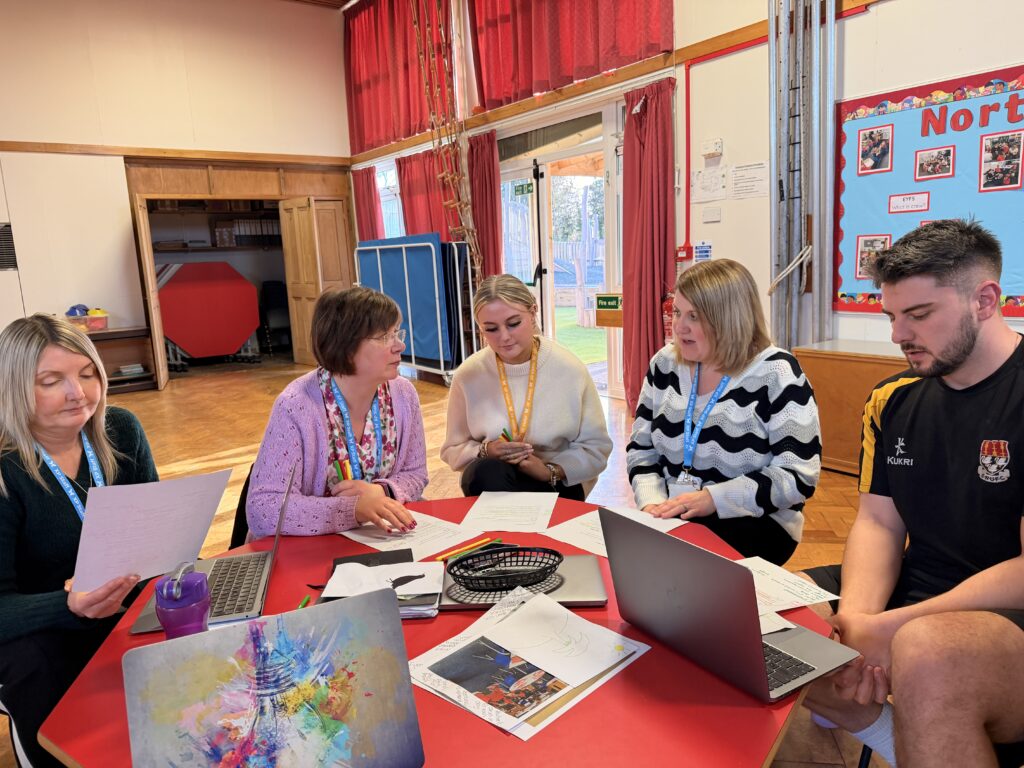
And that became the anchor for our CPD on inclusive classrooms.

What Does an Inclusive Classroom Look Like?

We began with a simple question:

What does an inclusive classroom look like, sound like and feel like?

Colleagues spoke with real honesty and professional courage. There was integrity in the discussion — a willingness to examine our own provision rather than describe an idealised version of it.

Across the room, themes emerged:

An inclusive classroom manages cognitive load.
It is deliberate about the construction of knowledge.
Teacher talk is purposeful and not excessive.
Assessment for learning is continuous.
Learning is not capped.
Groupings are flexible.
Children are engaged and meaningfully busy.
Instructions are clear and simple.
The language is caring.
Tasks might not all look the same.
Communication is supported — including through Communicate in Print.

And perhaps most powerfully:

“If it works for our more vulnerable learners, it works for all.”

SEND is not a bolt-on.

High-quality provision is the first and most powerful SEND strategy.

Inclusion Must Be Observable

We spent time unpicking lesson scenarios — identifying potential barriers, surfacing adult assumptions, and noticing inclusive strengths.

Across all four phases, similar barriers emerged when:

  • Instructions weren’t chunked
  • Vocabulary wasn’t explicitly unpacked
  • Modelling wasn’t left visible
  • Success criteria weren’t concrete
  • Anxiety around public error wasn’t considered
  • Cognitive load wasn’t deliberately reduced

And inclusion improved when:

  • Adult behaviour was deliberate
  • Scaffolds were visible
  • Expectations remained high
  • Processing time was protected
  • Participation was structured

Notice what we didn’t do.

We didn’t lower expectations in any scenario.

We didn’t simplify the thinking.

We increased precision.

Inclusion is not about doing more.

It is about doing what we already do — more deliberately.

The Power of Precision

The second time colleagues drew their trees — now with explicit criteria and a visible model — every tree improved.

Not because the adults had suddenly become better artists.

But because the conditions had changed.

Clarity reduces cognitive load.
Visible modelling reduces uncertainty.
Concrete criteria remove guesswork.
Structured participation reduces anxiety.

These are not add-ons. They are the foundations of high-quality teaching.

When inclusion is strong, it is observable. You can see it in the clarity of instruction. You can hear it in the language adults use. You can feel it in the confidence of learners.

And importantly — excellence remains visible.

Knowing the Learner in Front of Us

Precision in instruction is powerful — but it is only part of the picture.

True inclusion also depends on how well we know the individual learners in front of us.

High-quality universal provision reduces barriers for many. But inclusive classrooms are built on something deeper: an understanding of individual needs, strengths, triggers, motivations and starting points.

Planning, therefore, is not about creating separate lessons. It is about anticipating:

  • Who might struggle with this vocabulary?
  • Who will need processing time protected?
  • Who may experience anxiety around public error?
  • Who needs scaffolds to remain visible for longer?
  • Who requires a different route to demonstrate understanding?

This is not reactive support. It is intentional design.

When we plan with individual learners in mind — not as an afterthought, but as part of the initial thinking — inclusion becomes proactive rather than responsive.

And again, expectations do not lower.

They become clearer.

High Expectations. Reduced Barriers. Observable Excellence.

Inclusion is sometimes misinterpreted as something additional — something layered on once planning is complete.

But the session reinforced something simpler and more powerful:

High-quality provision is inclusive provision.

If we manage cognitive load.
If we make success criteria explicit.
If we model deliberately.
If we protect thinking time.
If we maintain high expectations.

Then we reduce barriers without reducing ambition.

Ability is rarely the barrier.

Access is our responsibility.

And inclusion must be observable.

Front Page News, Unpacking Inclusion, Unpacking T&L

Building Classroom Culture: Autumn Term Professional development at Norton Campus

Building the Bedrock: The Rationale for Our Classroom Culture PD

As XP Trust educators, our commitment extends beyond content delivery; it is fundamentally about ensuring every student becomes the best version of themselves through our Three Dimensional approach: character growth, beautiful work, and academic success. This is only possible when our core principle rings true: “When we get Crew right, we get everything right”.

Our recent professional development session, focusing on establishing routines and creating strong classroom culture, was a direct and intentional investment in this core principle. It was a call to look closely at the “countless little things” that transform a simple classroom into a high-functioning Crew environment that is safe and conducive to truly ambitious work.

The fundamental focus of this work is building “Crew” through shared experiences and activities, beginning with the core concept: Everything begins with Crew.

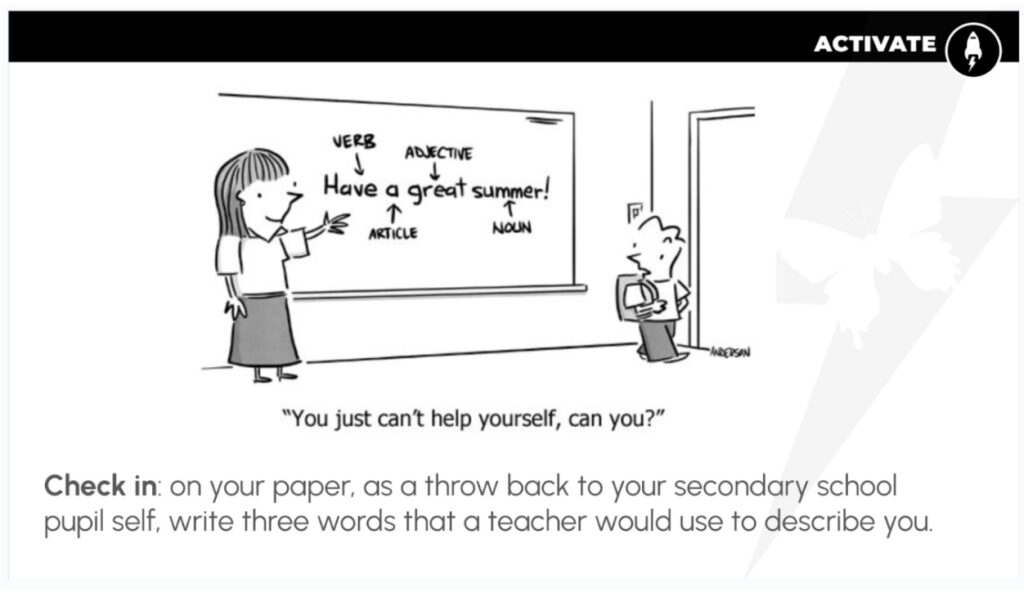
The session immediately engaged staff in a Crew activity. Staff were asked to independently write down three words they believed their own secondary school teachers would have used to describe them. Once completed, each member scrunched their paper into a ball, and we moved to the hall for a “snowball fight” .

Naturally, we established ground rules for the game. Nevertheless, many staff inevitably broke these rules within seconds by launching the ‘snowballs’ at targets well above the upper leg limit! Once the throwing had finished and we had recovered our collective breath, we circled up, unravelled a random “snowball,” and read out the words. This was illuminating to say the least, and we had a great time trying to guess which description belonged to which teacher!

Following the activity, we unpicked its rationale and uses. Like many Crew activities designed to support relationship development and classroom culture, this one was underpinned by several key factors: it was a shared experience, accessible to all, included fun and laughter, and perhaps most importantly, revealed something personal about those involved.

🧠 Deepening the Discussion: Classroom Culture and Evidence

Following the activity, staff were asked to independently write their own definition of ‘classroom culture.’ A universal, agreed-upon definition was then shared. Next, staff worked in groups to list all the things they thought contributed to creating a positive, vibrant, and effective classroom culture.

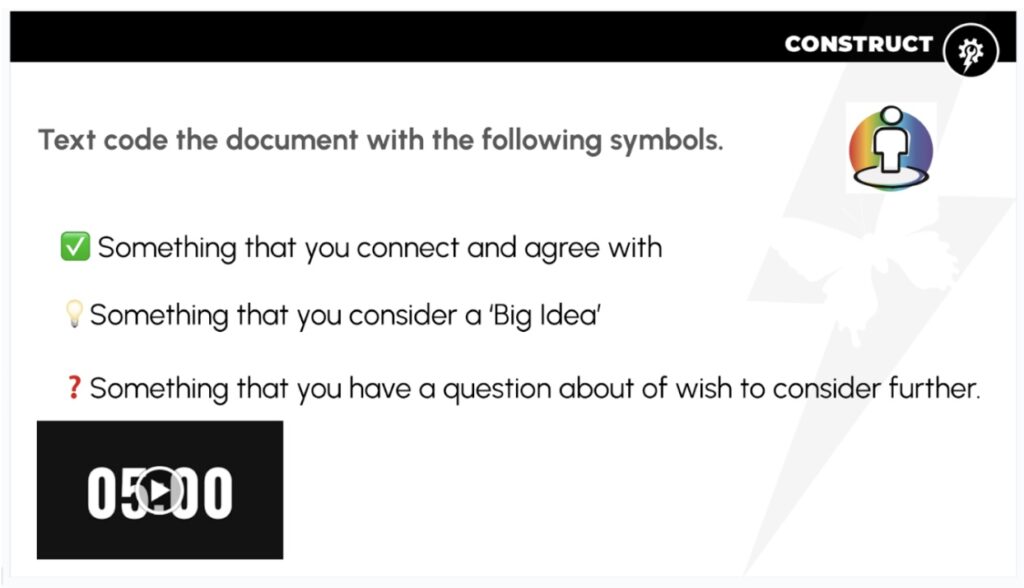
We captured these ideas and then moved on to reading educational research from the Education Endowment Foundation (EEF). The resources shared referenced evidence-based research that highlighted effective strategies and practices for promoting culture development—a particularly timely topic as we were in the throes of the autumn term. We text-coded this artefact focusing on connections, big ideas and questions that staff may have.

It is worth noting the research consensus here: teacher practitioners are more likely to implement ideas when they are presented as a clear, research-backed framework for effective teaching. This is exemplified by the successful integration of frameworks like Rosenshine’s Principles of Instruction in teacher training and professional development (Rosenshine, B., 2012).

The 5-a-Day Pillars of Effective Culture

Our professional discussion centered around five high-impact areas, informed by research from the Education Endowment Foundation (EEF) and designed to build robust classroom cultures from the ground up:

  • 1. (Re-)Establishing Learning Routines : Behavioural habits and routines, supported by high expectations from all staff, are key. In the session, we explored specific micro-routines, asking: How will you greet pupils at the door? and What will they do when they first enter your classroom?. This precision ensures that consistency becomes the bedrock of every session, promoting security and allowing students to be present and engage fully. This ties directly into the Management in the Active Classroom (MITAC) aspect of our Core Practices, focusing on routines, norms, and consistent adult behaviour.
  • 2. Building Strong Relationships : “Know your pupils” is a non-negotiable. This isn’t a shortcut; it requires dedicating time to understand the holistic needs, hobbies, and interests of every child. We encouraged tangible, repeatable actions, such as planning a regular 2-minute conversation to get to know students as individuals. Crew is, of course, the primary structure for developing and sustaining these critical relationships.
  • 4. Question, Question, Question : Effective questioning ensures that thinking is made visible for both students and the teacher. We challenged ourselves to model and scaffold powerful metacognitive questions and employ questioning strategies that ensure every pupil engages. This connects directly to Instruction (CP24), using checking for understanding protocols to swiftly track learning and adapt teaching to meet the needs of all students.
  • 5. Contact Home : Parental engagement is a powerful lever, consistently associated with improved outcomes, particularly for disadvantaged pupils. Our discussion focused on maintaining a healthy balance of positive contact—our ‘deposits’—so that when difficult conversations are necessary (our ‘withdrawals’), the relationship is one of mutual respect and trust. We advocated for focusing communications on key habits, like work routines, organisation, and reading. This intentional communication is essential for the ‘Be Kind’ aspect of our Habits of Work and Learning (HoWLs).

Embracing Movement, Collaboration, and Reflection

The professional development session itself modelled the very culture we aspire to foster, utilising several XP Trust Core Practices to drive engagement:

The professional development session itself modelled the very culture we aspire to foster, utilising several XP Trust Core Practices to drive engagement:

  • Protocols in Action: We used a ‘Snowball Fight’ check-in to start, immediately modelling a fun, structured way to build energy and follow rules. The session then leveraged Gallery Walk and Popcorn protocols (CP23) to ensure every voice was heard, ideas were collected quickly, and every participant was active—Crew, not passengers.
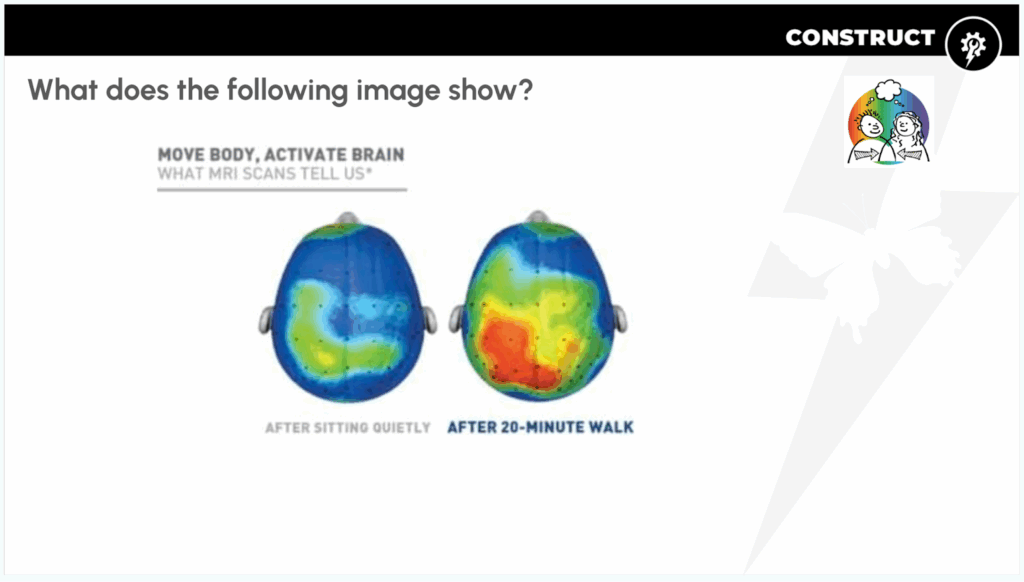
  • The Science of Movement: By moving around during the session, collecting quotes and text-coding the reading , we physically reinforced the insight that movement activates the brain . Movement isn’t just about restlessness; it’s about making connections —the foundation of learning and culture in every XP school.
  • Reflection for Tomorrow: The ultimate question tying the whole session together was: “How is the classroom culture going to be better tomorrow than it was today?”. This focus on a pledge and continuous improvement aligns with our commitment to developing excellent practice (CP47) and cultivating the self-aware, active learner we champion.

Building classroom culture is an ongoing process of conscious design, relentless follow-through, and collaborative reflection. This professional development was a vital touchstone to ensure we are all equipped with the specific, actionable strategies to build the strong Crew culture that underpins all the beautiful, purposeful work our students produce.

Front Page News, Unpacking T&L

Welcome to XPUnpacked.

XP Trust's platform to share, elevate, and make their practice visible.

Unpacking XPUnpacked

Unpacking T&L

Unpacking Crew

Unpacking Expeditions

Unpacking Beautiful Work

Unpacking Leadership

Unpacking Inclusion

Unpacking Curriculum

Unpacking Technology

Unpacking Publications /Research

School website powered by Realsmart Logo