This website uses cookies to ensure you get the best experience on our website.

Learn more
Got it!
XP Unpacked Logo
  • About us
XP Unpacked Logo
  • About us
XP Unpacked Logo
  • About us
  • Welcome to XP Unpacked.

Inclusion Must Be Observable

5 March 2026

Laura Parsons

“Draw a tree.”

That was the instruction.

Thirty seconds later, the room was full of trees — tall ones, careful ones, hurried ones, hesitant ones.

Then we added the success criteria.

The tree needed:

  • Visible roots
  • Exactly five branches
  • At least three leaves per branch
  • A labelled trunk

The laughter came first. Then the checking. Then the mild frustration.
“You didn’t say that.”

Exactly.

Nobody in the room lacked the ability to draw a tree. But many hadn’t met the criteria — not because they couldn’t, but because they didn’t know what success looked like.

Ability wasn’t the barrier. Access was.

And that became the anchor for our CPD on inclusive classrooms.

What Does an Inclusive Classroom Look Like?

We began with a simple question:

What does an inclusive classroom look like, sound like and feel like?

Colleagues spoke with real honesty and professional courage. There was integrity in the discussion — a willingness to examine our own provision rather than describe an idealised version of it.

Across the room, themes emerged:

An inclusive classroom manages cognitive load.
It is deliberate about the construction of knowledge.
Teacher talk is purposeful and not excessive.
Assessment for learning is continuous.
Learning is not capped.
Groupings are flexible.
Children are engaged and meaningfully busy.
Instructions are clear and simple.
The language is caring.
Tasks might not all look the same.
Communication is supported — including through Communicate in Print.

And perhaps most powerfully:

“If it works for our more vulnerable learners, it works for all.”

SEND is not a bolt-on.

High-quality provision is the first and most powerful SEND strategy.

Inclusion Must Be Observable

We spent time unpicking lesson scenarios — identifying potential barriers, surfacing adult assumptions, and noticing inclusive strengths.

Across all four phases, similar barriers emerged when:

  • Instructions weren’t chunked
  • Vocabulary wasn’t explicitly unpacked
  • Modelling wasn’t left visible
  • Success criteria weren’t concrete
  • Anxiety around public error wasn’t considered
  • Cognitive load wasn’t deliberately reduced

And inclusion improved when:

  • Adult behaviour was deliberate
  • Scaffolds were visible
  • Expectations remained high
  • Processing time was protected
  • Participation was structured

Notice what we didn’t do.

We didn’t lower expectations in any scenario.

We didn’t simplify the thinking.

We increased precision.

Inclusion is not about doing more.

It is about doing what we already do — more deliberately.

The Power of Precision

The second time colleagues drew their trees — now with explicit criteria and a visible model — every tree improved.

Not because the adults had suddenly become better artists.

But because the conditions had changed.

Clarity reduces cognitive load.
Visible modelling reduces uncertainty.
Concrete criteria remove guesswork.
Structured participation reduces anxiety.

These are not add-ons. They are the foundations of high-quality teaching.

When inclusion is strong, it is observable. You can see it in the clarity of instruction. You can hear it in the language adults use. You can feel it in the confidence of learners.
And importantly — excellence remains visible.

Knowing the Learner in Front of Us

Precision in instruction is powerful — but it is only part of the picture.

True inclusion also depends on how well we know the individual learners in front of us.

High-quality universal provision reduces barriers for many. But inclusive classrooms are built on something deeper: an understanding of individual needs, strengths, triggers, motivations and starting points.

Planning, therefore, is not about creating separate lessons. It is about anticipating:

  • Who might struggle with this vocabulary?
  • Who will need processing time protected?
  • Who may experience anxiety around public error?
  • Who needs scaffolds to remain visible for longer?
  • Who requires a different route to demonstrate understanding?

This is not reactive support. It is intentional design.

When we plan with individual learners in mind — not as an afterthought, but as part of the initial thinking — inclusion becomes proactive rather than responsive.

And again, expectations do not lower.

They become clearer.

High Expectations. Reduced Barriers. Observable Excellence.

Inclusion is sometimes misinterpreted as something additional — something layered on once planning is complete.

But the session reinforced something simpler and more powerful:

High-quality provision is inclusive provision.

If we manage cognitive load.
If we make success criteria explicit.
If we model deliberately.
If we protect thinking time.
If we maintain high expectations.

Then we reduce barriers without reducing ambition.
Ability is rarely the barrier.

Access is our responsibility.

And inclusion must be observable.

Front Page News

Building confidence through celebrating learning

25 February 2026

Olivia Fox

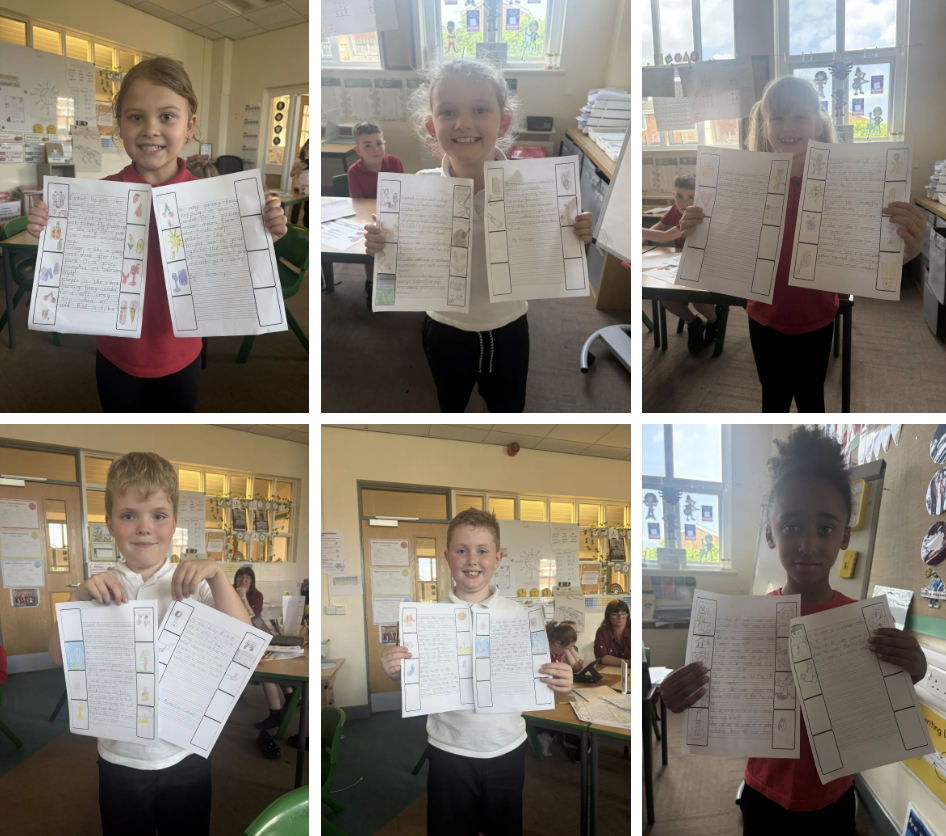
At Carcroft School, we believe that every child’s voice deserves to be celebrated. To bring this vision to life, we have integrated Jane Considine’s ‘Sentence Stackers’ into every classroom as a vibrant, living gallery of our pupils’ best work.

The Sentence Stacker anchor chart is more than just a ‘display’. It is a showcase of the very best written contributions gathered throughout a unit of writing. By stacking the high-quality sentences together, pupils can see exactly how individual “chunks” of writing build into a powerful, collective whole-class narrative.

Each day, individual pupils are praised for their writing created the previous day. Seeing their sentence pinned to the wall, next to their photographs, builds immense pride and confidence. Pupils feel proud of their writing and are eager to get their sentences onto the class stackers anchor chart!

In addition to this, we also celebrate a wider range of pupil’s work, beyond writing, on our ‘Beautiful Work’ display. This display promotes pupils who are Working Hard to Get Smart! Teachers use this display to showcase pupils who have met their targets, pupils who have created a great piece of work. Some teachers also capture pupil voice to display how they feel knowing their work is on our Beautiful Work display.

Front Page News, Uncategorised

Teaching Self Regulation and Metacognition to year 11.

11 February 2026

Darren Mead

It’s the penultimate day of half term and I have just asked my Year 11 crew, “How has the first week back helped you this half term?” A week in which students undertook a mini-expedition, “We Are G28,” with the question: How can we nurture the best version of our future selves? They completed a high ropes course, a cooking challenge, a session on learning and self-regulation, and an academic challenge. Their responses were telling: “I am just more aware of what I need to do and how it’s going;” “I am better at just getting things done—not because I am more motivated—I just know it needs to be done and I get it done;” and, “I am more organised, and that helps me keep on top of my extended study and get a chance to revise.”

All of which points to an increasing ability to self-regulate. No one is claiming that this week developed this; students learn this as they mature, and our expeditionary  curriculum has many (amazing) experiences for students to grow and develop these skills. However, this week did have a significant taught element that seems to have crystallized many students’ capacity for self-regulation.
So, what did we do?

In the case study, “How can I become a more independent learner?” We learned that becoming an independent learner is not just about doing work alone; it’s about taking ownership of our education by consciously thinking about how we learn and actively seeking ways to improve. This activity laid the foundation for the entire expedition, helping us understand the core principles behind effective learning.
We introduced the term “self-regulated learner” and began with a self-assessment questionnaire where we scored ourselves to gauge our current learning habits. It was a great way to honestly look at our strengths and areas for improvement. We explored what such a learner might know, do, and be like, and how they might think. We learned that a self-regulated learner “monitors, directs, and regulates actions toward goals of learning new information, expanding expertise, and self-improvement.”

Introducing a model of Self Regulation.

We used Pintrich’s model of Self-Regulation to break this down into “cognition”—the mental process of acquiring knowledge—and “metacognition,” which is being aware of our own thinking and learning to make better decisions, and “motivation”—a blend of our feelings of self-efficacy and resilience, our view of learning, and how we set and use goals. Asking a simple question of “how would you feel if you had to teach a class of Japanese students how to make a cake in fluent Japanese?” revealed how we change our goals to make them more manageable and build confidence levels.

Important distinctions were made between “Knowledge about Cognition” and “Regulation about Cognition.” This provided students with a simple dichotomy between knowing how to learn and study, and how to make good decisions while studying, based on an understanding of planning, monitoring, and regulation. 

Making pledges.

This ultimately led us to making pledges to become better learners, not just for this week but for the year ahead. Students started by picking three statements from the questionnaire that we want to improve upon and creating a plan with short and long-term goals. This personalized approach empowers us to take concrete steps towards becoming more independent and effective learners.

Name: 
Goal 1: carefully consider whether the materials or methods im using are actually useful and if im just rehashing something i already know 
Plan: provide reason for why I’m doing what I’m doing and keep a list of what knowledge im confident in and what needs further consolidation 
Goal 2: ensure im understanding full concepts and not forgetting what ive previously learned
Plan: before starting a new activity or creating a new resource, write a summary paragraph of whatever the last thing i learned was 
Goal 3: decide which revision methods work best for me depending on the subject rather than just repetitively exhausting the same basic method
Plan: attempt to memorise the same knowledge from multiple different methods and resources and decide which works best (eg. put maths formulas into a mindmap, flashcards, a quiz and a list

These pledges and Pintrich’s model of self-regulation were the backbone of all other experiences and gave us common language and understanding to talk about how we operate as learners and how we might need to be to grow our capacities.

The power of Crew.

Our next case study asked, “Why is crew important to my resilience?” To do this, students needed to explore their comfort zone, and so we traveled to North Yorkshire for a high ropes course, where we navigated obstacles relying on our crew. My crew had a wide range of confidences and abilities, but regardless of this, every student experienced a moment where they thought they could not do something. Where the fear kicked in and any notion of a plan or strategy was simply alien. This was when the power of Crew took over. This taught us that resilience isn’t a solitary trait but a collective strength, and that a strong crew provides a vital support system for overcoming adversity. This experience reinforced the importance of our group bonds and built the resilience needed for future challenges.

The next case study asked, “What can cooking tell me about learning?” It was set as a small group challenge, using the “critical skills model” as a starting point. Groups planned, prepared, and cooked a two-course meal. This involved managing a budget, researching recipes, dividing tasks, and presenting a final dish with a menu card including costs and nutritional information. What the focus really was, was a way to explore the ideas we had learned about Self-regulated Learning, and the Planning, Monitoring, and Regulation part of “metacognition,” and a further reinforcement of our crew, as success requires clear communication and efficient teamwork.

The final case study was very much a culmination of the previous experiences and a chance to apply our newly made pledges. It asked the question: How can I improve my academic performance?

Again, using the critical skills approach to set a challenge, each student chose a difficult curriculum topic and worked to master it using new knowledge of self-regulated learning. Namely, setting manageable goals, considering strategy, learning strategy, and then monitoring and regulating our attention throughout. It culminated in each crew member presenting their progress to our crew, which showed us we were capable of performing at a high level, proving that we can overcome academic obstacles through effort and effective learning strategies. This activity linked theoretical skills to practical application, demonstrating the tangible benefits of a focused, self-regulated approach to studies.

Letter to My Future Self.

At the end of each day, debriefing sessions allowed us to reflect on what the activities taught us about nurturing our future selves, and this culminated in a “Letter to My Future Self.” This final task made the learning tangible, creating a time capsule of our growth to reflect upon in the future. Students wrote in confidence that this final task was personal. It could be shared if they wanted, but it was for them—a chance to be honest with themselves, engage in positive self-talk, and aspire to the best version of themselves.

Front Page News

Teachmeet 22.01.26 – What a night! 🚀👊🕺🏻

23 January 2026

Jamie Portman

Just a quick update for our T&L Festival… check out the Padlet last night’s Teachmeet. More people than expected joined us at Doncaster Rovers FC and the room was jam packed full of like minded colleagues. It acted as a kick off for today’s Festival 🚀

Made withMade with Padlet

Front Page News, Uncategorised

Building Classroom Culture: Autumn Term Professional development at Norton Campus

16 November 2025

Gavin Chadwick

Building the Bedrock: The Rationale for Our Classroom Culture PD

As XP Trust educators, our commitment extends beyond content delivery; it is fundamentally about ensuring every student becomes the best version of themselves through our Three Dimensional approach: character growth, beautiful work, and academic success. This is only possible when our core principle rings true: “When we get Crew right, we get everything right”.

Our recent professional development session, focusing on establishing routines and creating strong classroom culture, was a direct and intentional investment in this core principle. It was a call to look closely at the “countless little things” that transform a simple classroom into a high-functioning Crew environment that is safe and conducive to truly ambitious work.

The fundamental focus of this work is building “Crew” through shared experiences and activities, beginning with the core concept: Everything begins with Crew.

The session immediately engaged staff in a Crew activity. Staff were asked to independently write down three words they believed their own secondary school teachers would have used to describe them. Once completed, each member scrunched their paper into a ball, and we moved to the hall for a “snowball fight” .

Naturally, we established ground rules for the game. Nevertheless, many staff inevitably broke these rules within seconds by launching the ‘snowballs’ at targets well above the upper leg limit! Once the throwing had finished and we had recovered our collective breath, we circled up, unravelled a random “snowball,” and read out the words. This was illuminating to say the least, and we had a great time trying to guess which description belonged to which teacher!

Following the activity, we unpicked its rationale and uses. Like many Crew activities designed to support relationship development and classroom culture, this one was underpinned by several key factors: it was a shared experience, accessible to all, included fun and laughter, and perhaps most importantly, revealed something personal about those involved.

🧠 Deepening the Discussion: Classroom Culture and Evidence

Following the activity, staff were asked to independently write their own definition of ‘classroom culture.’ A universal, agreed-upon definition was then shared. Next, staff worked in groups to list all the things they thought contributed to creating a positive, vibrant, and effective classroom culture.

We captured these ideas and then moved on to reading educational research from the Education Endowment Foundation (EEF). The resources shared referenced evidence-based research that highlighted effective strategies and practices for promoting culture development—a particularly timely topic as we were in the throes of the autumn term. We text-coded this artefact focusing on connections, big ideas and questions that staff may have.

It is worth noting the research consensus here: teacher practitioners are more likely to implement ideas when they are presented as a clear, research-backed framework for effective teaching. This is exemplified by the successful integration of frameworks like Rosenshine’s Principles of Instruction in teacher training and professional development (Rosenshine, B., 2012).

The 5-a-Day Pillars of Effective Culture

Our professional discussion centered around five high-impact areas, informed by research from the Education Endowment Foundation (EEF) and designed to build robust classroom cultures from the ground up:

  • 1. (Re-)Establishing Learning Routines : Behavioural habits and routines, supported by high expectations from all staff, are key. In the session, we explored specific micro-routines, asking: How will you greet pupils at the door? and What will they do when they first enter your classroom?. This precision ensures that consistency becomes the bedrock of every session, promoting security and allowing students to be present and engage fully. This ties directly into the Management in the Active Classroom (MITAC) aspect of our Core Practices, focusing on routines, norms, and consistent adult behaviour.
  • 2. Building Strong Relationships : “Know your pupils” is a non-negotiable. This isn’t a shortcut; it requires dedicating time to understand the holistic needs, hobbies, and interests of every child. We encouraged tangible, repeatable actions, such as planning a regular 2-minute conversation to get to know students as individuals. Crew is, of course, the primary structure for developing and sustaining these critical relationships.
  • 4. Question, Question, Question : Effective questioning ensures that thinking is made visible for both students and the teacher. We challenged ourselves to model and scaffold powerful metacognitive questions and employ questioning strategies that ensure every pupil engages. This connects directly to Instruction (CP24), using checking for understanding protocols to swiftly track learning and adapt teaching to meet the needs of all students.
  • 5. Contact Home : Parental engagement is a powerful lever, consistently associated with improved outcomes, particularly for disadvantaged pupils. Our discussion focused on maintaining a healthy balance of positive contact—our ‘deposits’—so that when difficult conversations are necessary (our ‘withdrawals’), the relationship is one of mutual respect and trust. We advocated for focusing communications on key habits, like work routines, organisation, and reading. This intentional communication is essential for the ‘Be Kind’ aspect of our Habits of Work and Learning (HoWLs).

Embracing Movement, Collaboration, and Reflection

The professional development session itself modelled the very culture we aspire to foster, utilising several XP Trust Core Practices to drive engagement:

The professional development session itself modelled the very culture we aspire to foster, utilising several XP Trust Core Practices to drive engagement:

  • Protocols in Action: We used a ‘Snowball Fight’ check-in to start, immediately modelling a fun, structured way to build energy and follow rules. The session then leveraged Gallery Walk and Popcorn protocols (CP23) to ensure every voice was heard, ideas were collected quickly, and every participant was active—Crew, not passengers.
  • The Science of Movement: By moving around during the session, collecting quotes and text-coding the reading , we physically reinforced the insight that movement activates the brain . Movement isn’t just about restlessness; it’s about making connections —the foundation of learning and culture in every XP school.
  • Reflection for Tomorrow: The ultimate question tying the whole session together was: “How is the classroom culture going to be better tomorrow than it was today?”. This focus on a pledge and continuous improvement aligns with our commitment to developing excellent practice (CP47) and cultivating the self-aware, active learner we champion.

Building classroom culture is an ongoing process of conscious design, relentless follow-through, and collaborative reflection. This professional development was a vital touchstone to ensure we are all equipped with the specific, actionable strategies to build the strong Crew culture that underpins all the beautiful, purposeful work our students produce.

Front Page News

Sharing our Stories: 05/09/2025

5 September 2025

Geoff Hewitt

Beautiful Work This Week

Welcome back!

Here’s a selection of beautiful work from across the XP Trust from the our first two weeks back! To read about other stories from across the XP Trust, visit xptrust.org.

Top of the Blogs

Year 6 leavers party 2025 @ Green Top

Family learning fun @ Plover

Our colour monster journey! @ Carcroft School

Acts of service to others @ Norton Juniors

Crew Barnes: 1st week back @ XP

Beautiful Artwork by Freya @ XP East

Weekly Update for Families @ XP Gateshead

Share your stories with us!

We now have a new dedicated news email so that you can send your stories, updates or ideas about potential news articles directly to us in Comms.

It might be something you or your students have achieved, a charity you’re supporting or anything at all that deserves a wider audience.

Write to us at [email protected] –  we want to hear about it, write about it and celebrate it!

Front Page News

It’s all about the debrief!

2 September 2025

Andy Sprakes

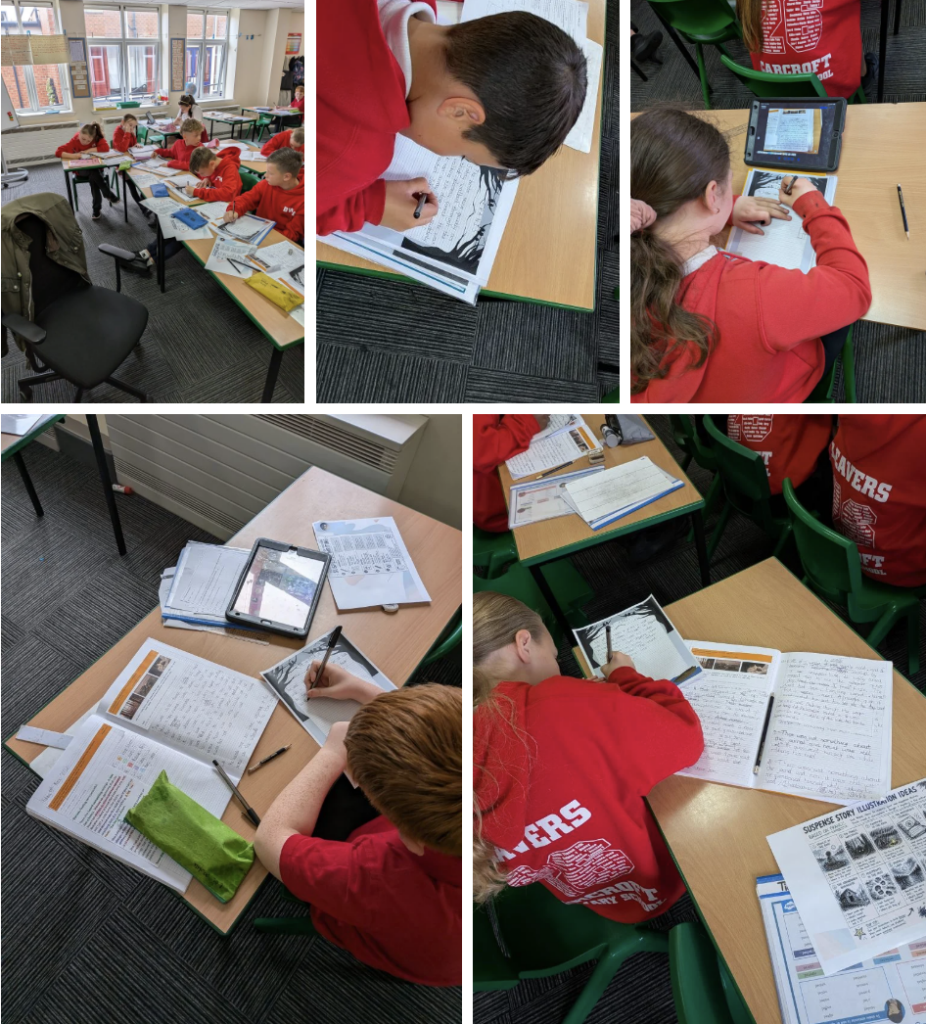
In August of 2025, I visited schools to support and observe ‘First Week Back.’ It was encouraging to see, hear and feel our students engaging in Crew activities that had a clear purpose, were well organised and engaging. The systematic planning by schools to include a Guiding Question that students answer through their shared experiences is ensuring that Crew is at the forefront of everything we do at XP Trust. 

One of my key notices was that debriefing at the end of a Crew activity sometimes was very general. For example, questions like ‘what went well?’ or ‘What could we do better next time?’ were used which are fine to encourage students to speak but often elicited surface responses from students, if they weren’t built on.

Students circling up at Carcroft!

The most effective debriefs were the ones where staff returned to the purpose of First Week Back, sharply focusing the activity to student experience and linking this explicitly to Character Traits and HoWLs, thereby compelling students to reflect on the guiding question, the purpose of the week and the development of culture. 

Some powerful debrief questions I heard which elicited profound responses from students were:

“How did the activity we engaged in earlier help us to show the character trait of courage? Could you give me specific examples?”

“In our Crew norms we focussed on what compassion looks, sounds and feels like. Where did you see, hear and feel compassion today? What was the impact of this?”

“We showed real craftsmanship and quality in that activity. What skills did we develop? How will we ensure we do this in expeditions in the coming year?”

As John Dewey suggested in his work, ‘We do not learn from experience; we learn from reflecting on experience.’ 

In next year’s planning for First Week Back it would be useful to keep this at the forefront of our thinking, planning and delivery so that reflecting on and  reinforcing culture is more explicitly embedded.

As I said, ‘It’s all about the debrief!!’

Andy Sprakes  

Front Page News
School website powered by Realsmart Logo